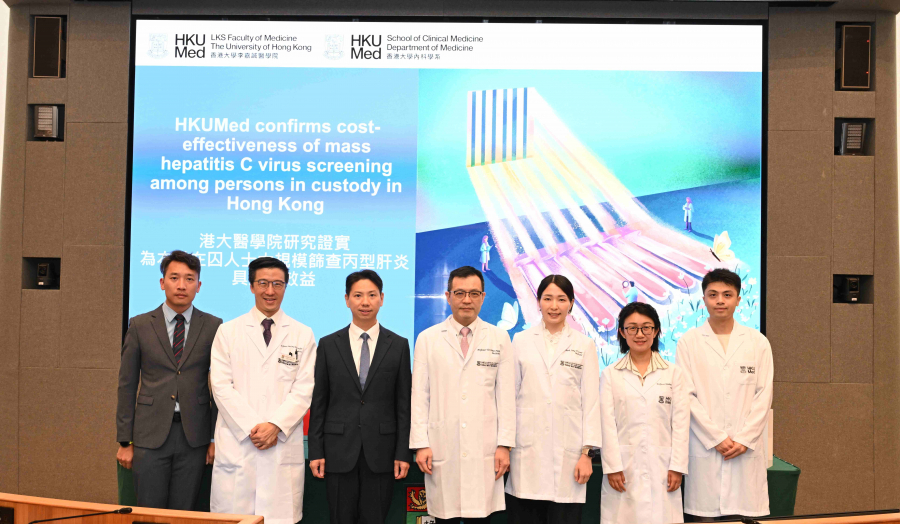
A recent study led by the Department of Medicine, School of Clinical Medicine, LKS Faculty of Medicine of the University of Hong Kong (HKUMed), in collaboration with the Correctional Services Department, has demonstrated that mass screening of hepatitis C virus (HCV) infection among persons in custody (PICs) is a cost-effective strategy. By enabling early identification and treatment of infected PICs, this approach can offer measurable health benefits. The data provides strong evidence to support the implementation of systematic prison-based HCV screening in Hong Kong. The findings were published in The Lancet Regional Health – Western Pacific [link to the publication].
The hidden burden of HCV in correctional settings
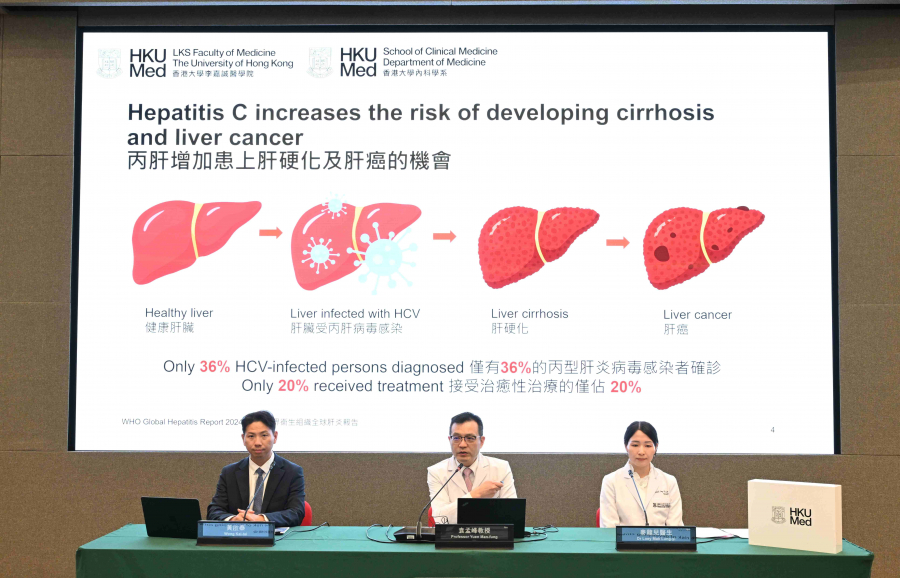
‘HCV infection can lead to cirrhosis, liver cancer and death. By 2024, only 36% of people living with HCV had been diagnosed, and only 20% had received curative treatment. HCV-related mortality in Hong Kong has continued to rise over the past decade. Targeted screening for high-risk groups is a key strategy for HCV micro-elimination, helping to achieve the World Health Organization’s (WHO) goal of eliminating viral hepatitis by 2030,’ said Professor Yuen Man-fung, Chair Professor and Chief of the Division of Gastroenterology and Hepatology, Department of Medicine, School of Clinical Medicine, HKUMed, and a member of the Steering Committee on the Prevention and Control of Viral Hepatitis.
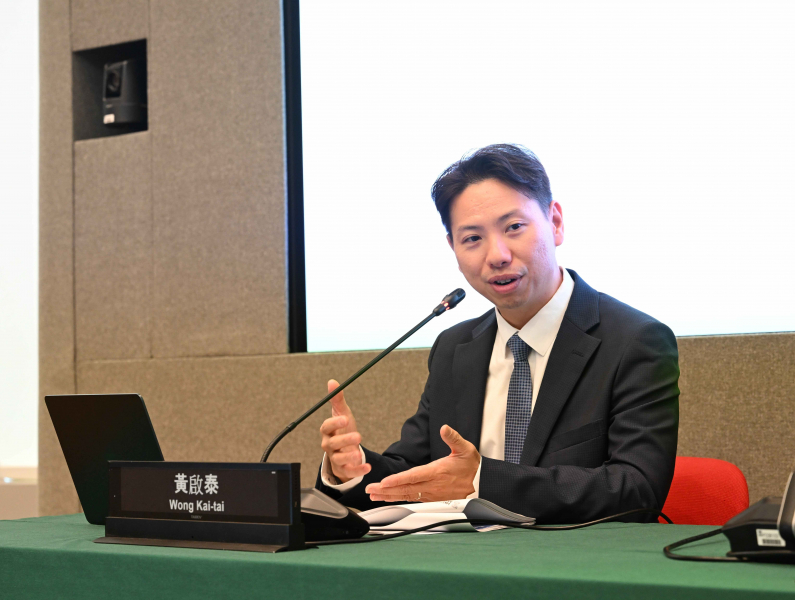
‘In view of the prevalence of HCV, with the rate as high as 20%, among PICs reported in other countries and regions, the Correctional Services Department began a collaboration with HKUMed to collect epidemiological data in correctional institutions by using of “micro-elimination” approach,’ said Wong Kai-tai, Senior Superintendent (Health Care) of the Correctional Services Department.
The HKUMed team launched a pilot study in 2023 in collaboration with the Correctional Services Department to provide screening and treatment to eligible PICs on a voluntary basis. ‘Based on the data from this pilot study, the prevalence of HCV among PICs was found to be 4.1%, which is higher than 0.3% of prevalence among the general population in Hong Kong. This finding of the prevalence of HCV among PICs being higher than the general public in Hong Kong is similar to the ones reported in other countries and regions. The pilot study also confirmed the feasibility of eliminating HCV in a target group in a correctional institution, and showed a success rate of 100% in linking individuals to care and viral eradication under the support of the research team,’ Wong Kai-tai explained.
Periodic prison-based screening lowers advanced liver disease risk by over 30%
Leveraging data from the pilot programme, the team simulated a cohort of 10,000 PICs and conducted a cost-effectiveness analysis of HCV screening and treatment strategies among PICs in Hong Kong, using a decision tree and Markov model. The comparator was a no-screening scenario, which reflects the current situation in Hong Kong and other regions without screening programmes, where diagnoses typically occur only when advanced clinical symptoms appear.
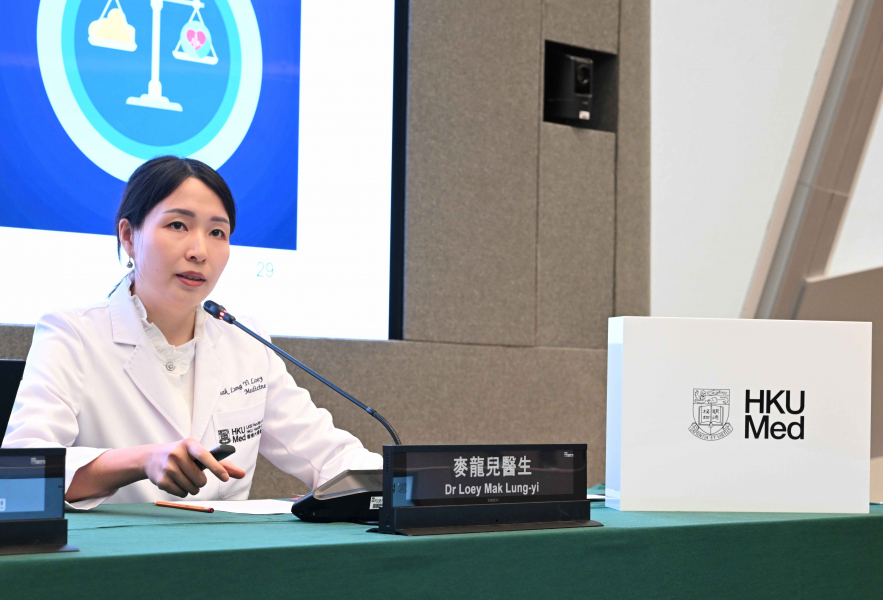
‘We found that one-off universal screening among current PICs, newly admitted PICs, or both, was highly cost-effective with health benefits,’ explained Dr Loey Mak Lung-yi, Clinical Associate Professor, Department of Medicine, School of Clinical Medicine, HKUMed, who led the pilot programme and the current cost-effectiveness analysis. ‘Compared to the no-screening approach, screening allows a shift in resource allocation from managing complications such as liver cancer to early diagnosis and treatment. Additionally, tele-consultation emerged as a cost-efficient and scalable model for specialist care, serving as a viable alternative to face-to-face outpatient or hospital-based consultations, increasing access to specialist services for PICs.’
Cost-effectiveness of systematic HCV screening
The study underscores the importance of implementing systematic and targeted HCV screening in the correctional setting. The findings suggest that prison-based screening is particularly valuable in settings with moderate to high HCV prevalence and adequate healthcare resources, where structured programmes can yield substantial health improvements and economic advantages. Integrating correctional settings into national hepatitis prevention plans will be essential for accelerating the global goal of hepatitis elimination.
The study provides a useful framework for the government to plan further strategies as detailed in the Hong Kong Viral Hepatitis Action Plan 2025 – 2030. It also reinforces HKUMed’s ongoing commitment to serving people in need and integrating evidence-based medicine into healthcare policies.
About the research team
The project was jointly led by Dr Loey Mak Lung-yi, Clinical Associate Professor, and Professor Shirley Li Xue, Assistant Professor, Department of Medicine, School of Clinical Medicine, HKUMed. The team members from the same Department included Professor Yuen Man-fung, Li Shu Fan Medical Foundation Professor in Medicine, Chair Professor and Chief of the Division of Gastroenterology and Hepatology; Professor Walter Seto Wai-kay, Simon KY Lee Professor in Gastroenterology and Clinical Professor; Dr Dai Zonglin, post-doctoral fellow; Wong Kai-tai, Senior Superintendent (Health Care), and Edgar Chow Kwong-chuen, Principal Officer, Correctional Services Department, the Government of the Hong Kong Special Administrative Region of the People’s Republic of China.
Acknowledgements
The study was partly supported by the Health and Medical Research Fund of the Health Bureau, the Government of the HKSAR.
Media enquiries
Please contact LKS Faculty of Medicine of The University of Hong Kong by email (medmedia@hku.hk).

 Facebook
  HKU IOS App
  HKU Android App
  Social Media and Apps